How AI Attribution Cuts Wasted Ad Spend (Without Guesswork)
Aug 19, 2026
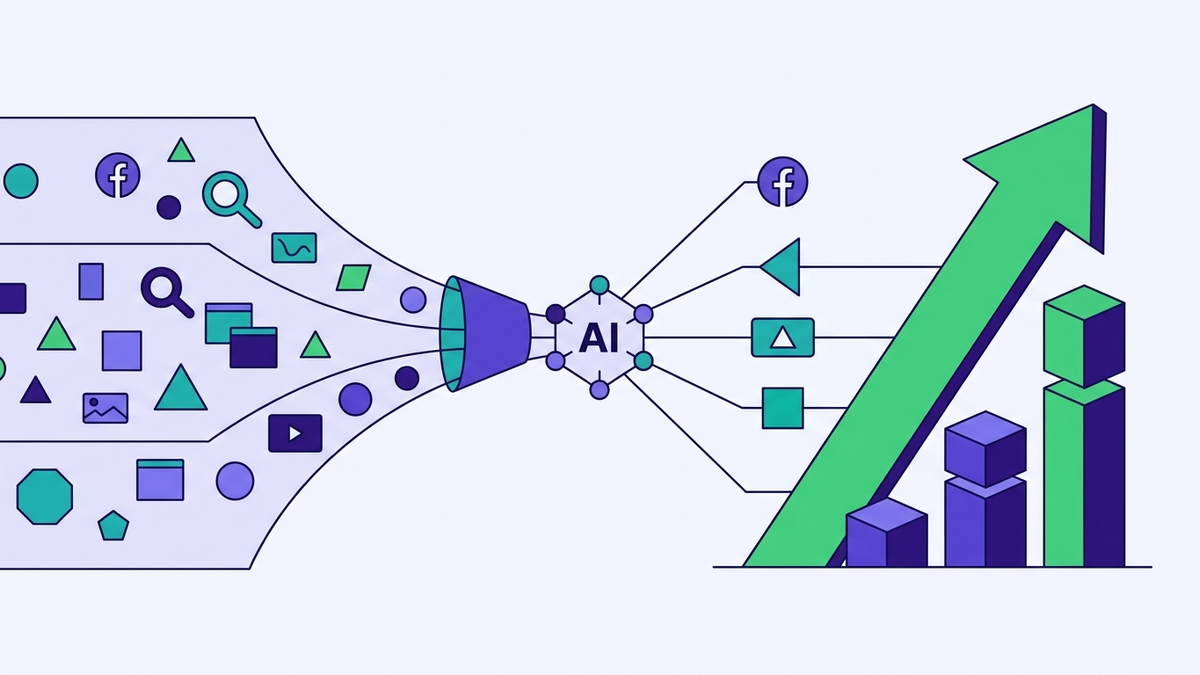
The real reason your ad budget leaks
Most small teams don't overspend because they're careless. They overspend because their tools disagree.
Meta says it drove 47 conversions. Google claims 39. Your CRM shows 22 closed deals. Your accountant sees $8,400 in revenue. Nobody's lying — they're all counting differently, and the gaps are where money quietly disappears.
AI attribution isn't a dashboard trick. It's the practice of tying every ad click to a specific person, watching that person move through your pipeline, and updating your ad spend based on who actually pays you — not who filled out a form.
Here's how to close those gaps.
Where ad budgets typically leak
Before you fix waste, know what waste looks like. In our experience working with SMB marketing teams, the four biggest leaks are:
- Duplicate credit. Two platforms both claim the same conversion, so you scale both campaigns and pay twice for the same customer.
- Lead-quality blindness. You optimize for form fills, but 70% of those leads never qualify. Your cost-per-lead looks great; your cost-per-customer is a disaster.
- Attribution windows that don't match reality. A 7-day click window on a product with a 45-day sales cycle will systematically undercount your best channels.
- Zombie campaigns. Ad sets that generated one big deal six months ago still run today, coasting on old performance data.
Every one of these is invisible if your CRM, ad platforms, and website analytics don't share a single source of truth.
What AI attribution actually does differently
Rules-based attribution (last-click, first-click, linear) is essentially a filing system. It puts credit somewhere so the numbers add up.
AI attribution is different in three specific ways:
1. It stitches identity across sessions and devices. A visitor who clicked a Facebook ad on their phone Tuesday and closed a deal on their laptop three weeks later is the same person. Deterministic and probabilistic matching connect those touchpoints without you tagging anything manually.
2. It weighs touchpoints by outcome, not order. Instead of assuming the last click did the work, the model looks at which combinations of touchpoints correlate with closed revenue over time — and updates those weights as new deals close.
3. It feeds signals back to ad platforms. This is the part most teams skip. Meta and Google both accept offline conversion data through their APIs. When you send back "this lead became a $12,000 customer," the platforms start finding more people like them. When you send back "this lead ghosted," they stop.
That feedback loop is where waste actually gets cut. Not in the reporting — in the buying.
A simple framework for auditing your current spend
Before you change anything, run this four-step audit. It usually takes an afternoon.
Step 1: Reconcile your numbers. Pull last month's conversions from every ad platform, your CRM, and your revenue system. If the totals differ by more than 10%, you have an attribution problem, not a performance problem.
Step 2: Sort leads by revenue, not volume. Group closed customers by original source. Which channel produced your top 20% of revenue? Which produced the most leads that went nowhere? These are rarely the same channel.
Step 3: Calculate true CAC by campaign. Not cost-per-lead. Cost per closed customer, using actual revenue data. Expect surprises — a campaign with a $40 CPL and 30% close rate beats one with a $12 CPL and 4% close rate every time.
Step 4: Kill or shrink the bottom third. In most audits we've seen, roughly a third of ad spend produces almost no revenue. Pause it for 30 days and watch what happens. Usually: nothing bad.
What to look for in an attribution setup
If you're evaluating tools — including Plyto — here's what actually matters:
- One customer record, from first click to closed deal. If your ad platform and CRM store leads separately, you'll spend forever reconciling them.
- Server-side tracking. Browser-based pixels miss 20–40% of conversions thanks to iOS privacy changes and ad blockers. Server-side capture closes that gap.
- Offline conversion sync to ad platforms. Non-negotiable. Without this, your ad platforms are optimizing on incomplete data.
- Revenue attribution, not just conversion attribution. A tool that tells you which ad drove a lead is table stakes. One that tells you which ad drove $47,000 in booked revenue is useful.
- Model transparency. You should be able to see why the system credits a channel, not just trust the number.
The habit that separates efficient advertisers
The teams that stop wasting spend do one boring thing consistently: they review revenue-based performance weekly, not lead-based performance.
Leads lie. Revenue doesn't.
When every campaign, keyword, and ad set is ranked by dollars closed — with the AI adjusting bids and budgets based on which customers actually paid — the waste has nowhere to hide. Underperformers get pruned automatically. Winners get more room to run.
That's the loop Plyto is built around: capture the lead, nurture it, close the deal, feed the outcome back to the ad platforms, and let the next dollar chase the pattern that worked. No spreadsheets stitching platforms together at 11 p.m.
If you're spending more than a few thousand dollars a month on ads and can't tell us which specific dollar closed which specific deal, you're not running ads. You're funding an experiment. AI attribution is how you turn the experiment into a system.
Plyto is the AI that makes and runs your ads
It writes the ad, builds the landing page, captures the leads and shows you which dollar came back. Try it free, no credit card.
Start free